Canadian Crewed Commercial Vessel — Industry Class - Gold Standard
Built in the mid-22nd century for medium to long distance hauling, the CCCV Gold Standard is the third production ship of 10 in IMMACO Astrologistics' Industry-class series of mid-sized crewed cargo tugs. The vessel utilizes a Generation 3.5 nuclear fusion prime mover for power and propulsion, making it capable of taking loads to intermediate destinations and smaller large payloads even further. Often referred to as "The Standard" by her crew, the Gold Standard is a workhorse of the cis-lunar and Near Earth Asteroid economies, with occasional missions to as far out as the Asteroid Belt, beyond Mars.
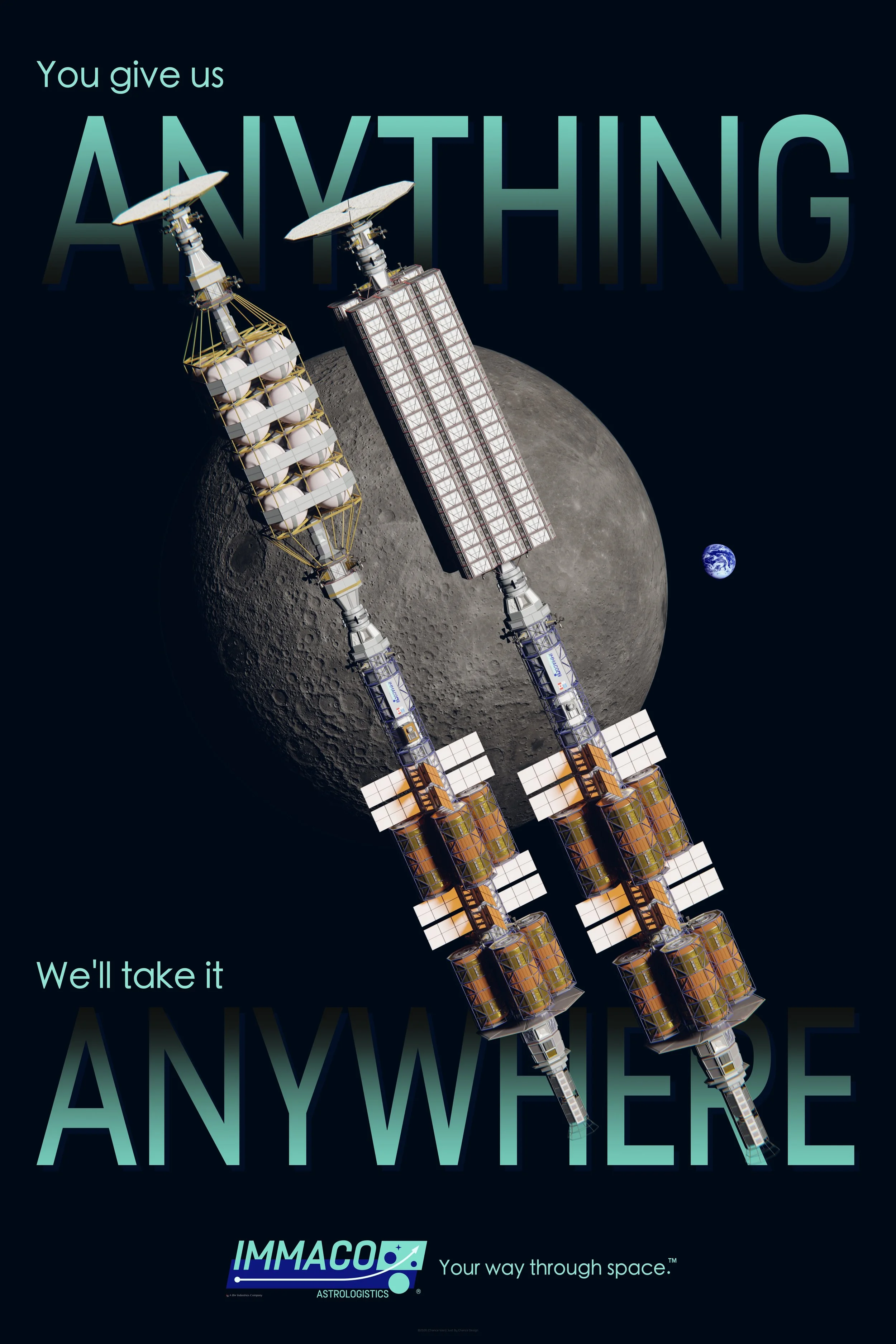
Business to Business advert for IMMACO Astrologistics, the owner and operator of this specific fleet of ships.
A visualization of the Gold Standard off-loading and loading cargo at TSF-16
Idea:
Continuing off of my recent set of hard science fiction projects, I wanted to continue exploring world I have been building over the past several months, especially regarding space logistics and cargo transport.
While a lot of the hard sci-fi art scene is populated with cool looking spaceships, much of the focus of these designs fall into a specific category of military spacecraft. Many of these designs tend to be interpretations of massive conically shaped ships with railgun and laser turrets. While I don’t dispute the attractiveness of these, I’ve done my own interpretation of the genre, I’ve noticed a considerable lack of the more mundane aspect of these hyper-realistic sci-fi worlds.
Much like with my real life interests, while I find warships to be deeply fascinating and cool, it’s the container ships and tankers and all the accompanying infrastructure that surrounds them that captures a majority of my attention. These designs and projects exist to partly address that not-as-well-explored angle of the artistic community.
Process:
The design of the Gold Standard started first with the cargo section. Using the cargo container holding cell structure from the Horizon Clipper as a basis, I updated on the design of both the operation of the ConBar container barge as well as the cargo containers that populate the cells. The cargo section and its containers are intended to be a thoughtful interpretation of how future in-space logistics would look like.
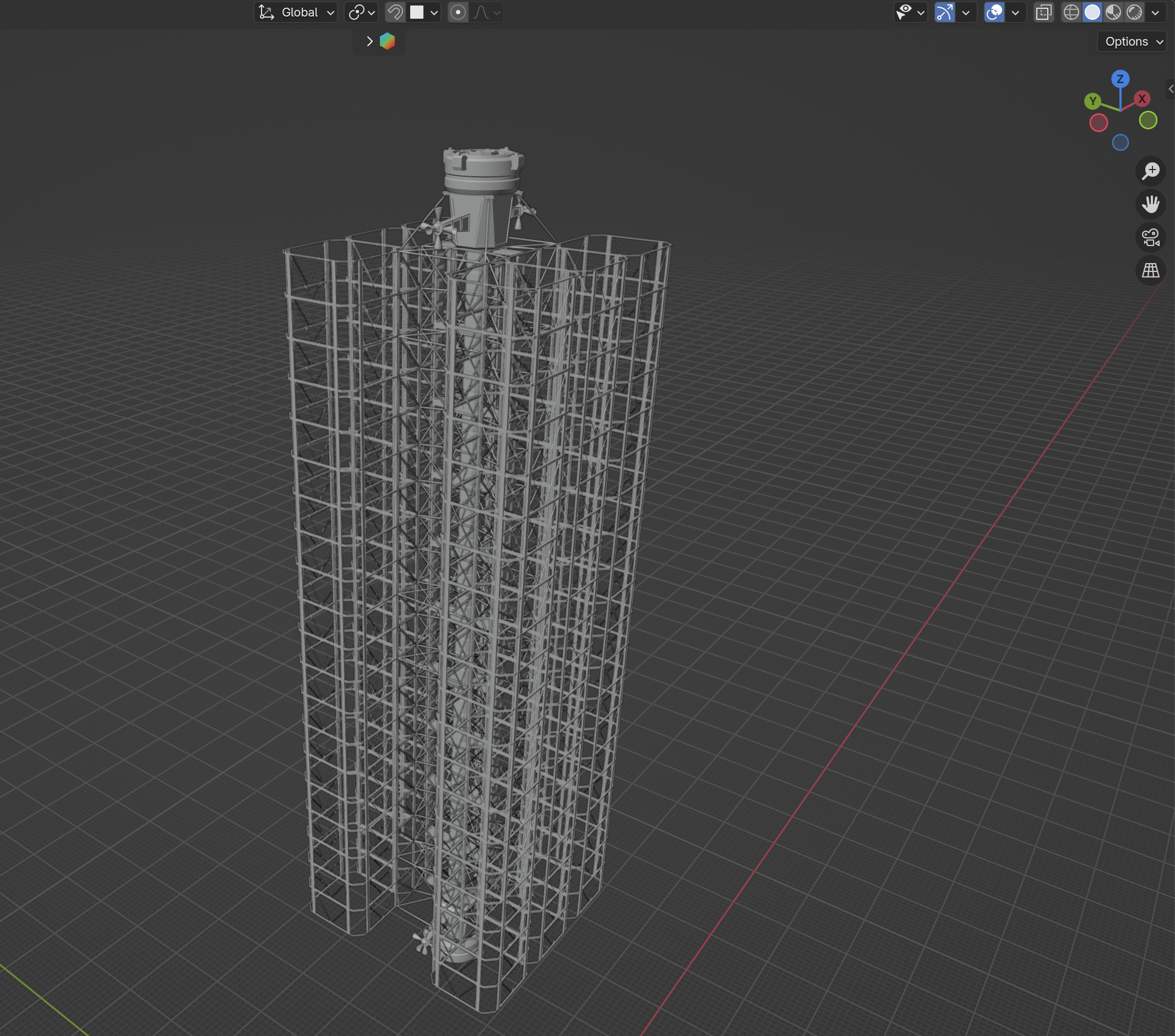
From there, I began work on the main “tug” spacecraft that would propel cargo to and from its destination. This started with the main crewed module segments at the center of the ship.
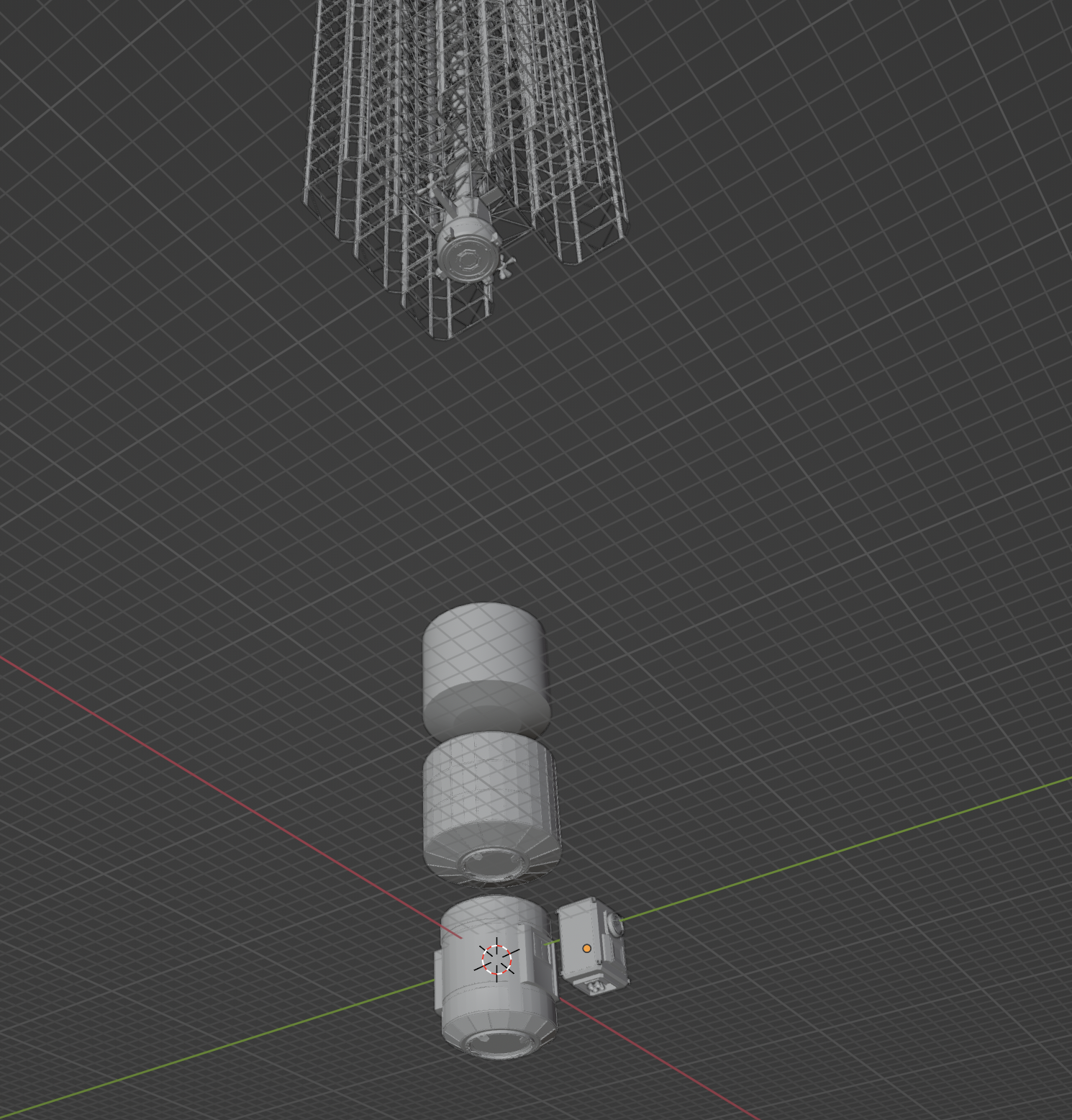
The initial designs for the modules in the habitat and control section of the main spacecraft, including the lifeboat.
Using Blender3D, the modules are modeled on basic cylinders meshes, with detailing applied to each face of the shape. Additional details and other components are added to the end of the model to create the mating surfaces for the modules. While these are not particularly visible in the final renders and animatics, they additional modeling allows for the possibility for other use cases, like breakdown animations, cutaways, and relevant reuse in other projects as kit bashed components.
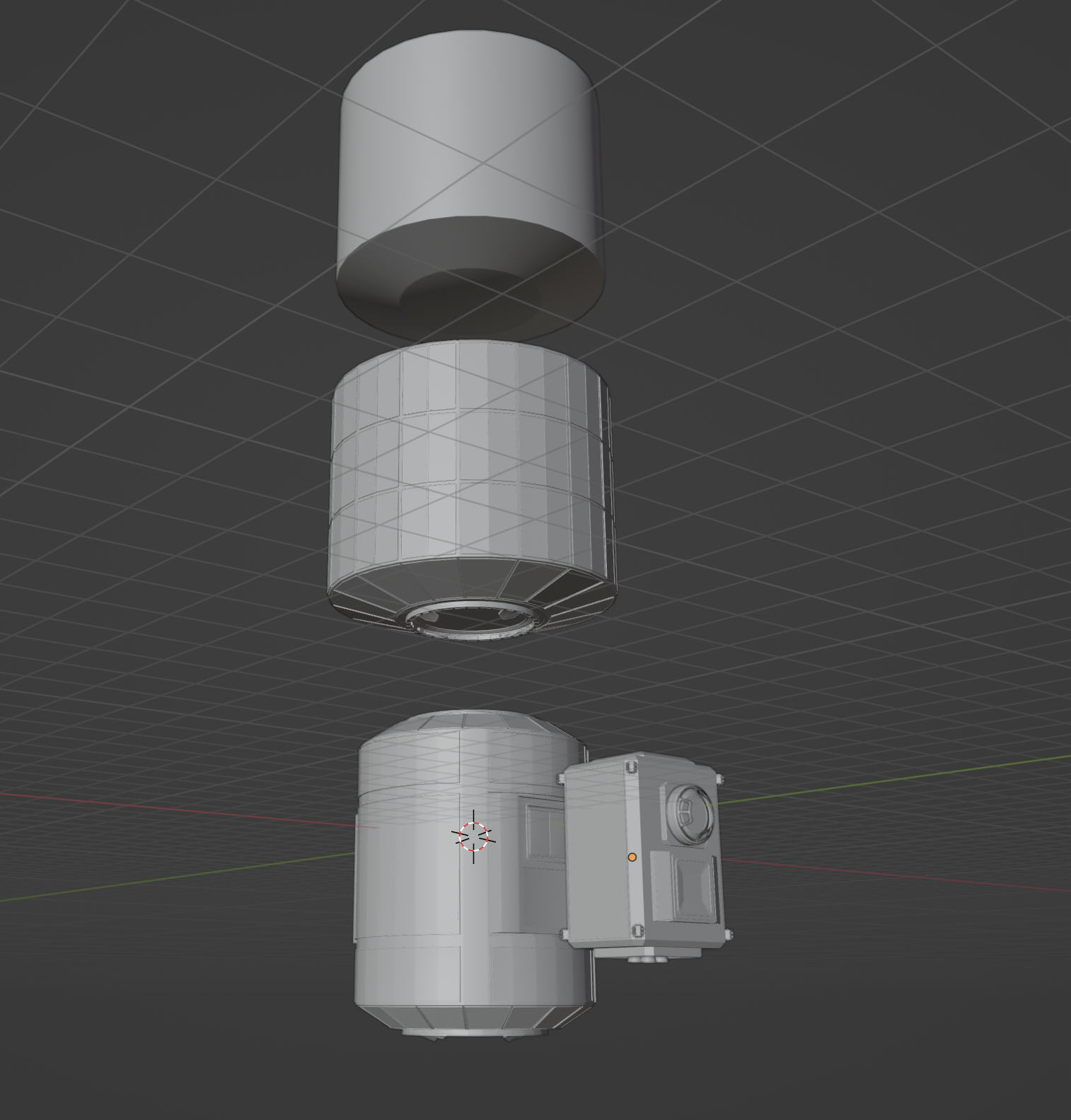
Close up of the work in progress modules, with more detailed looks at the life boat module - the blocky component of to the right
Progress on the main spacecraft rotated between the modules, the truss structure that ties the modules together, and the application of materials and detailing to the exterior of each component. Following on the cylindrical habitat modules were the core segments that run along the center (up and down) the vehicle, it’s accompanying truss work that supports it, and the RCS components like pylons and nozzles.
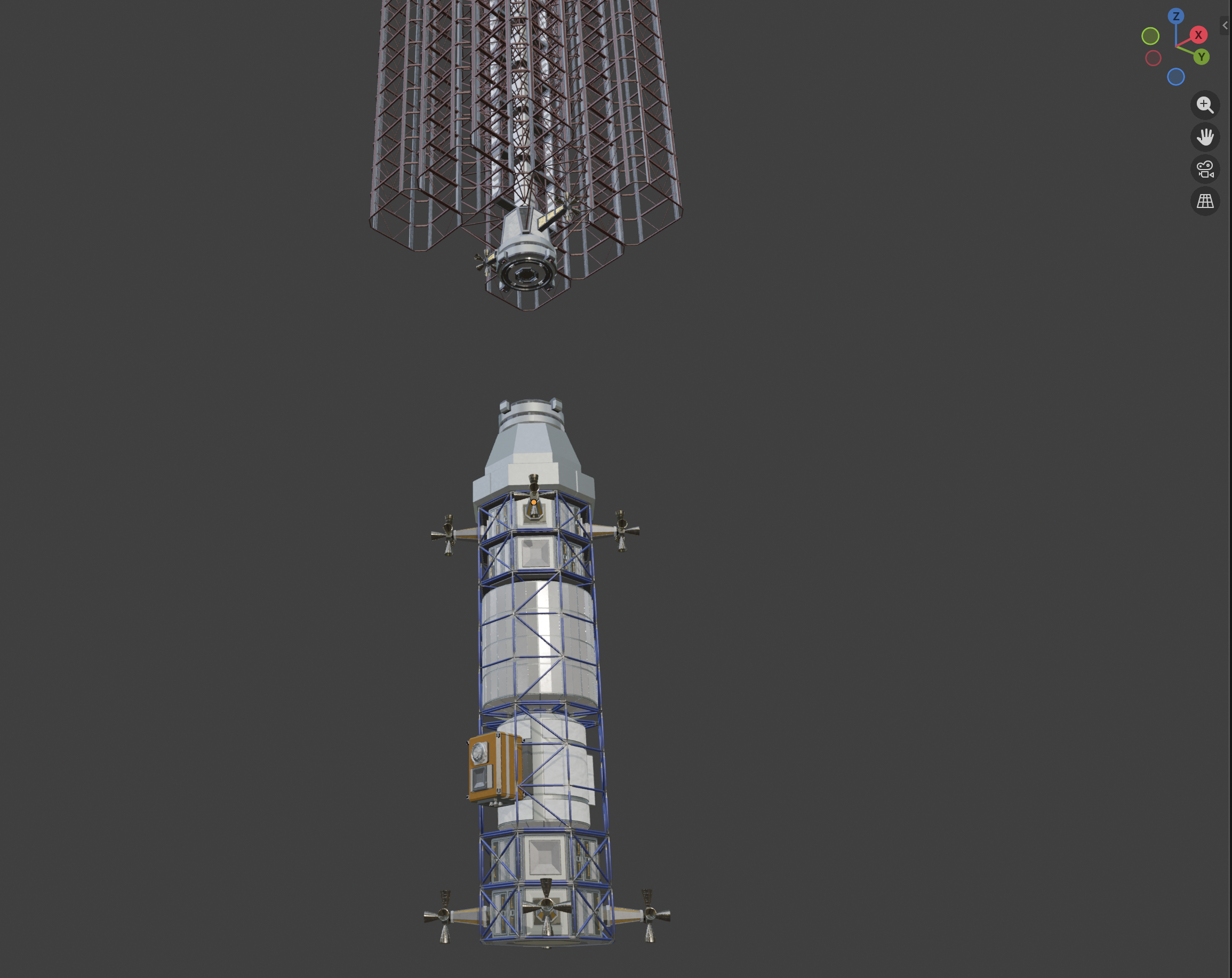
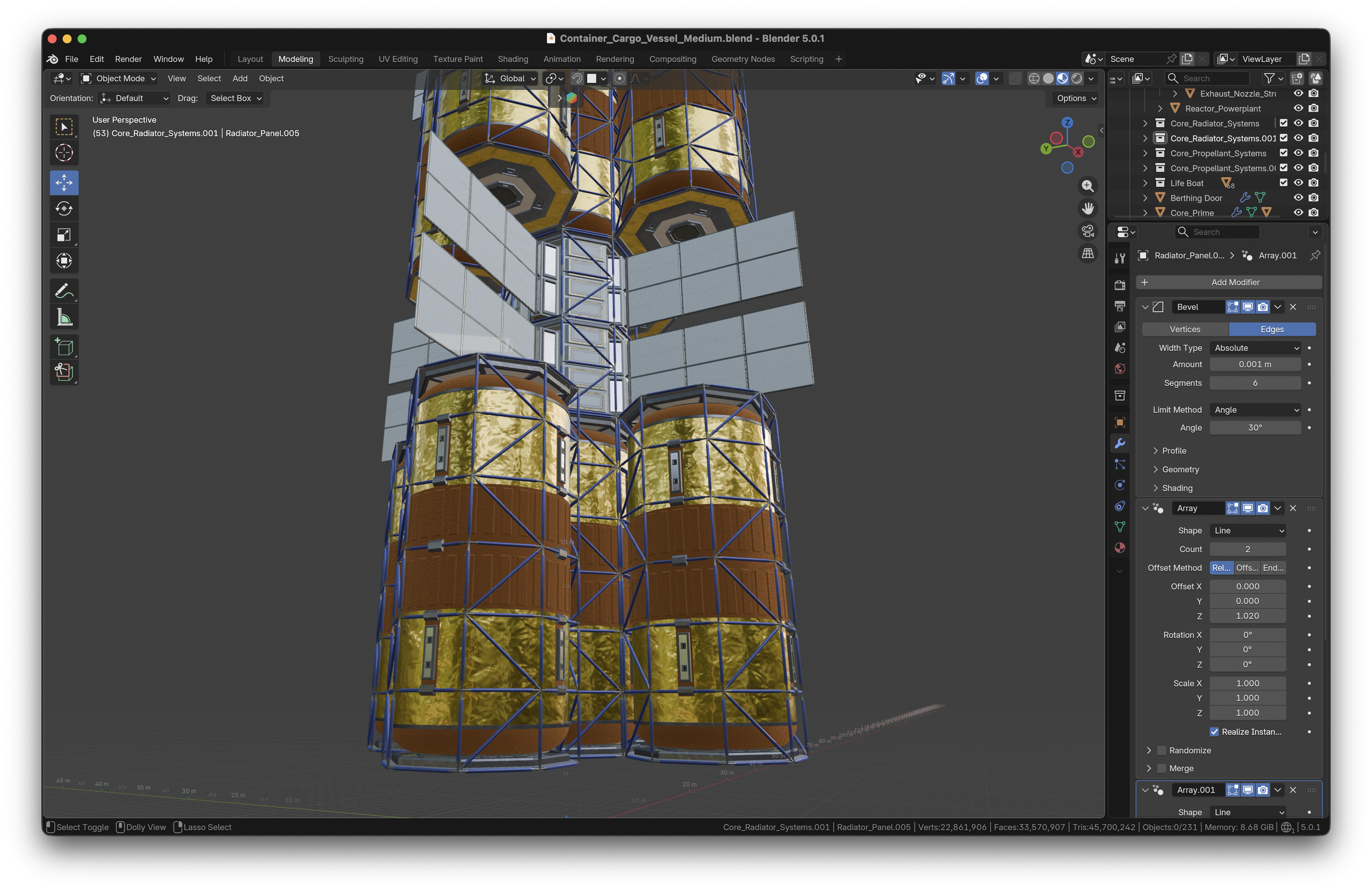
After getting most of the work on the upper half of the tug completed, I moved on to the propellant and heat-management parts of the ship. This included the tanks for the propellant, the radiators, and all other intermediate pieces that bring them together. The principles used to make the crewed and core modules are applied to this segment with the intentional to show them all as a single integrated ship. The idea was to have something that was clearly assembled like the ISS, but more cohesive and coherent - something more easily recognizable as a transiting ship rather than a space station.
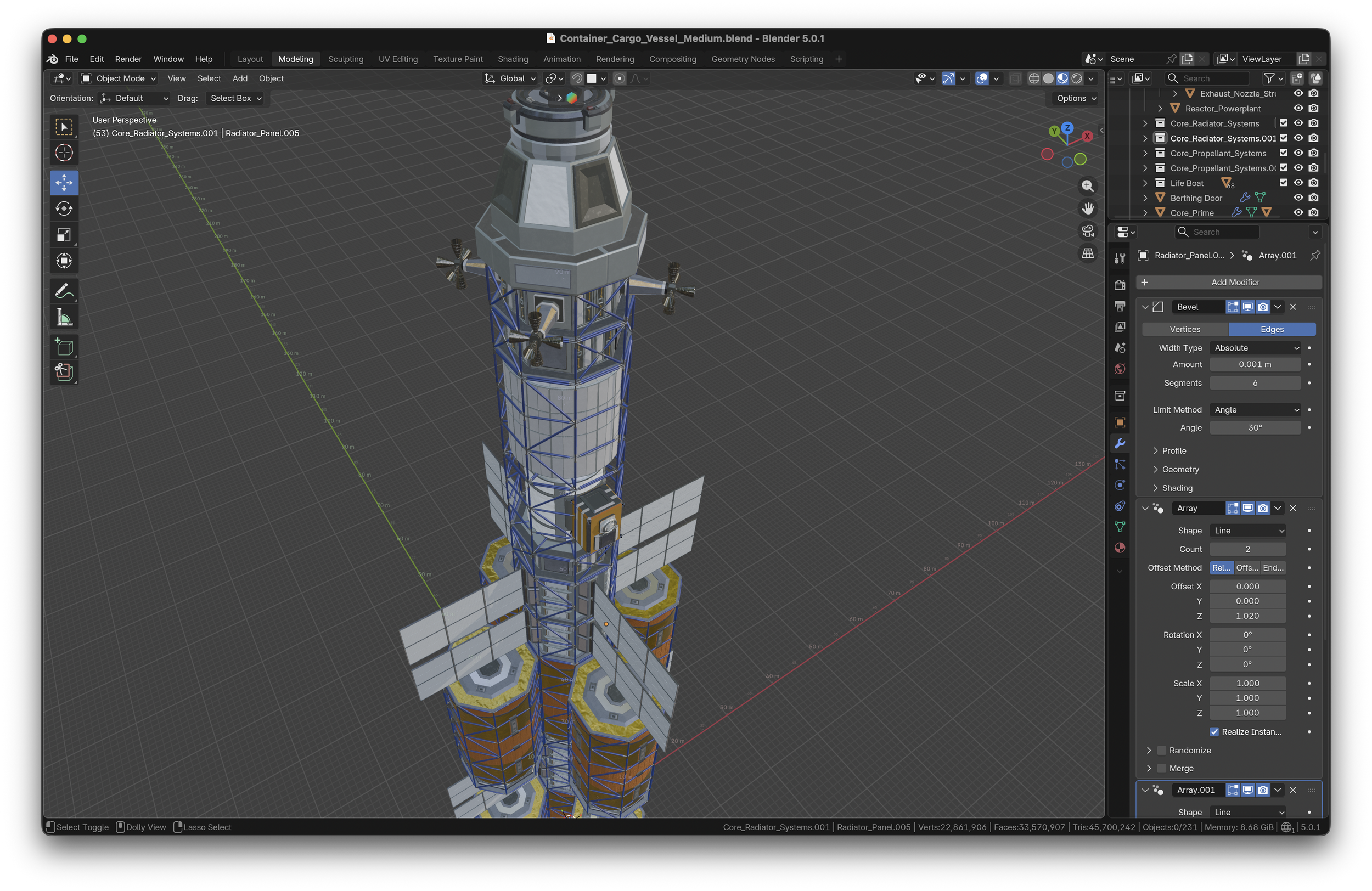
Typically, once each module/section of the ship is complete, it gives me an opportunity to put the in-progress pieces together. This allows me to get a sense for how the overall form factor of the model will look like. It’s a time to assess how things are, admire progress, and make any changes if needed. Moreover, given the modular nature of this type of design philosophy, it is not too difficult to move and swap things around to reach something I’m happy with.
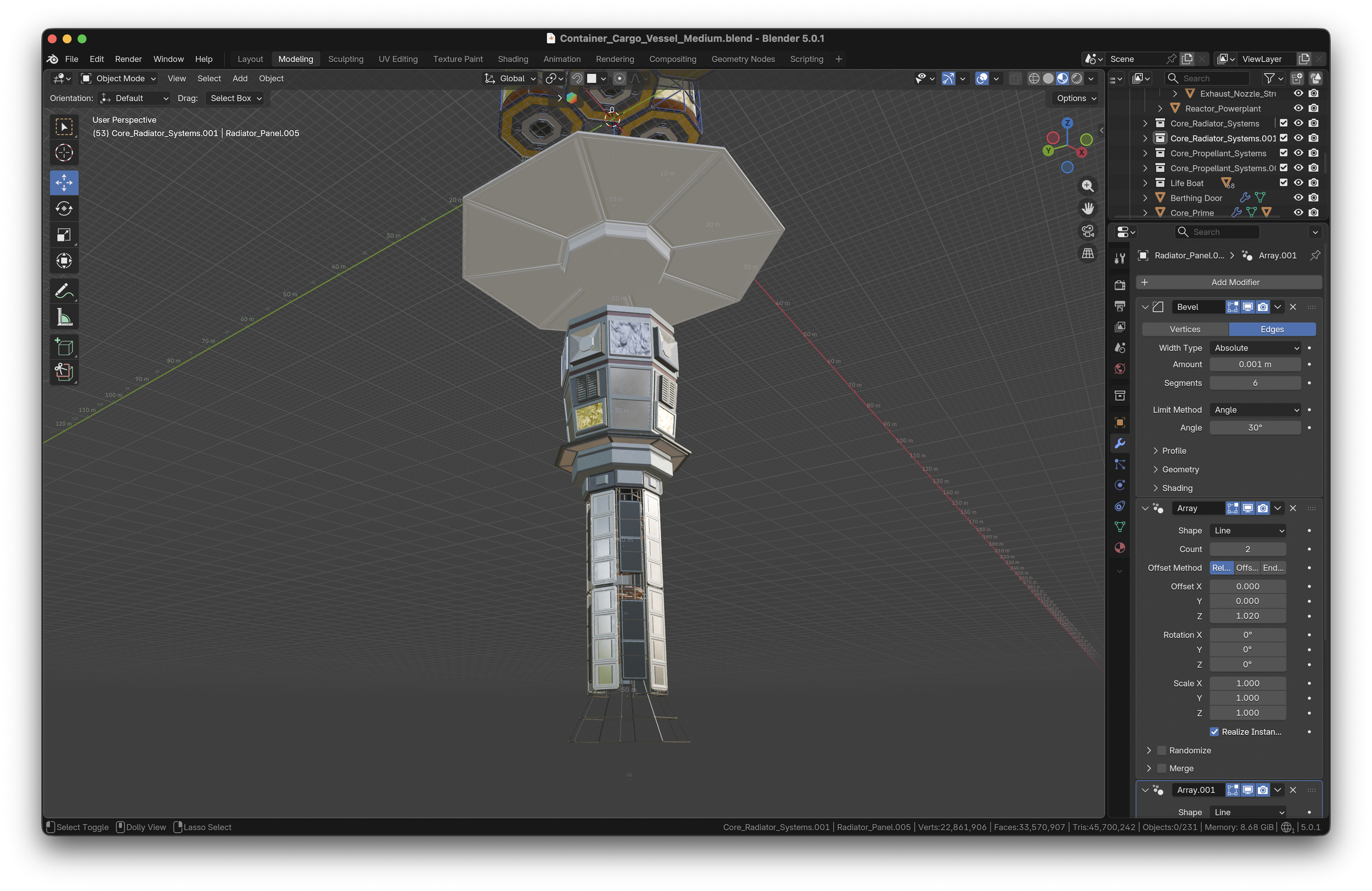
Working my way down the ship, I next worked on the propulsion elements of the ship, along with its shadow shield. Again pulling inspiration from my other designs, I utilized past-created parts and design ideas to bring the model together.
At this point, I was already under the thinking that the recent group of spaceship designs that I have done (the Colorado, Chicago, Blue Rose) will be all associated together in a unified ‘universe’ and ‘lore’ which I am actively working on now. This world has yet to have a name however…
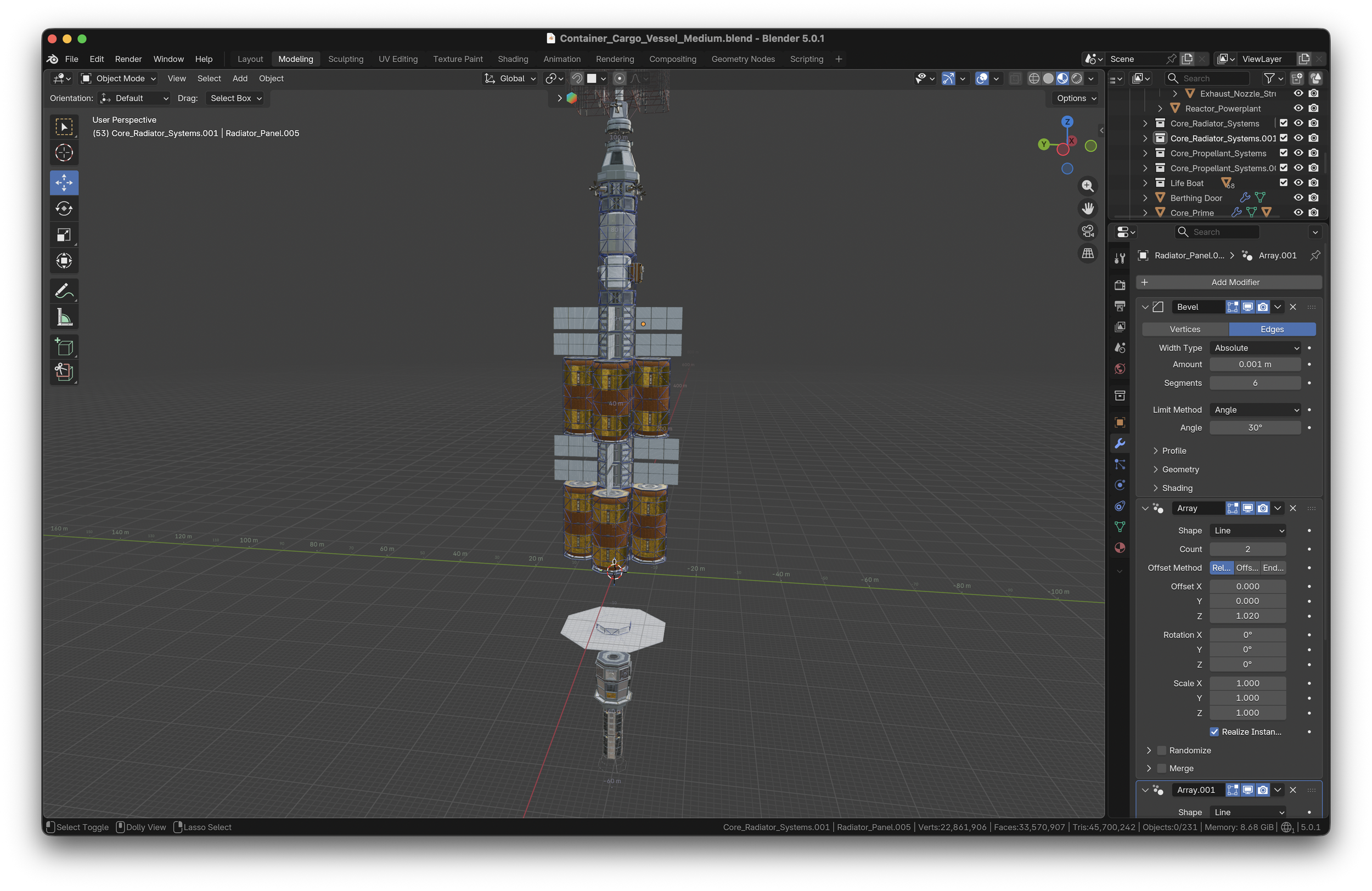
Following completion of the main models, I rendered out some initial visuals and later some animatics. Beyond that, I started working on a related model, the TSF-16 project that also exists in the same world. These would later be incorporated together into a longer-form animation featuring both, providing a distinctive vision for how commerce and shipping in the stars would look like.
Scenes:
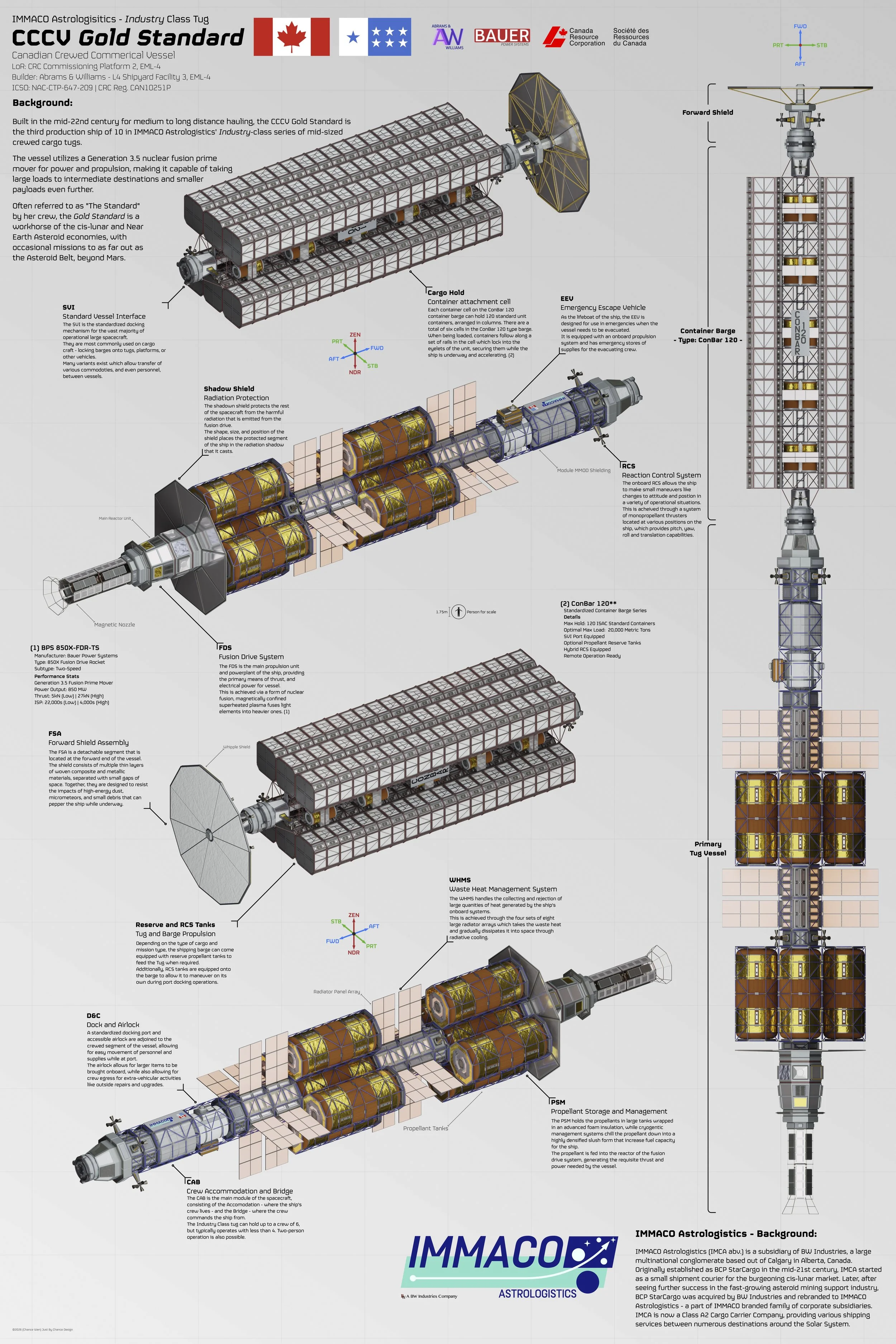
A free downloadable version of this poster, the B2B advert, and other renders can be found on my Ko-fi Shop!
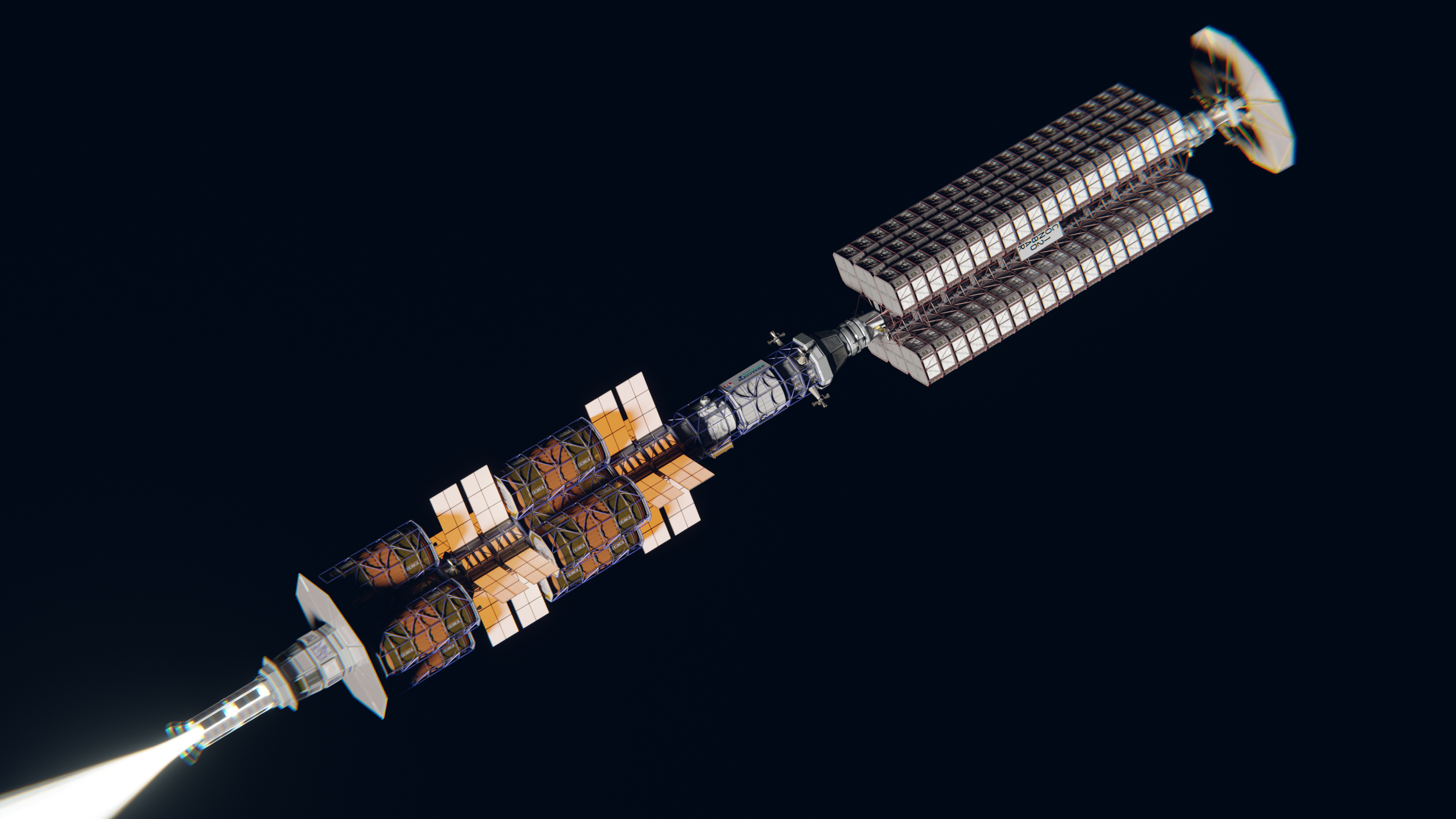
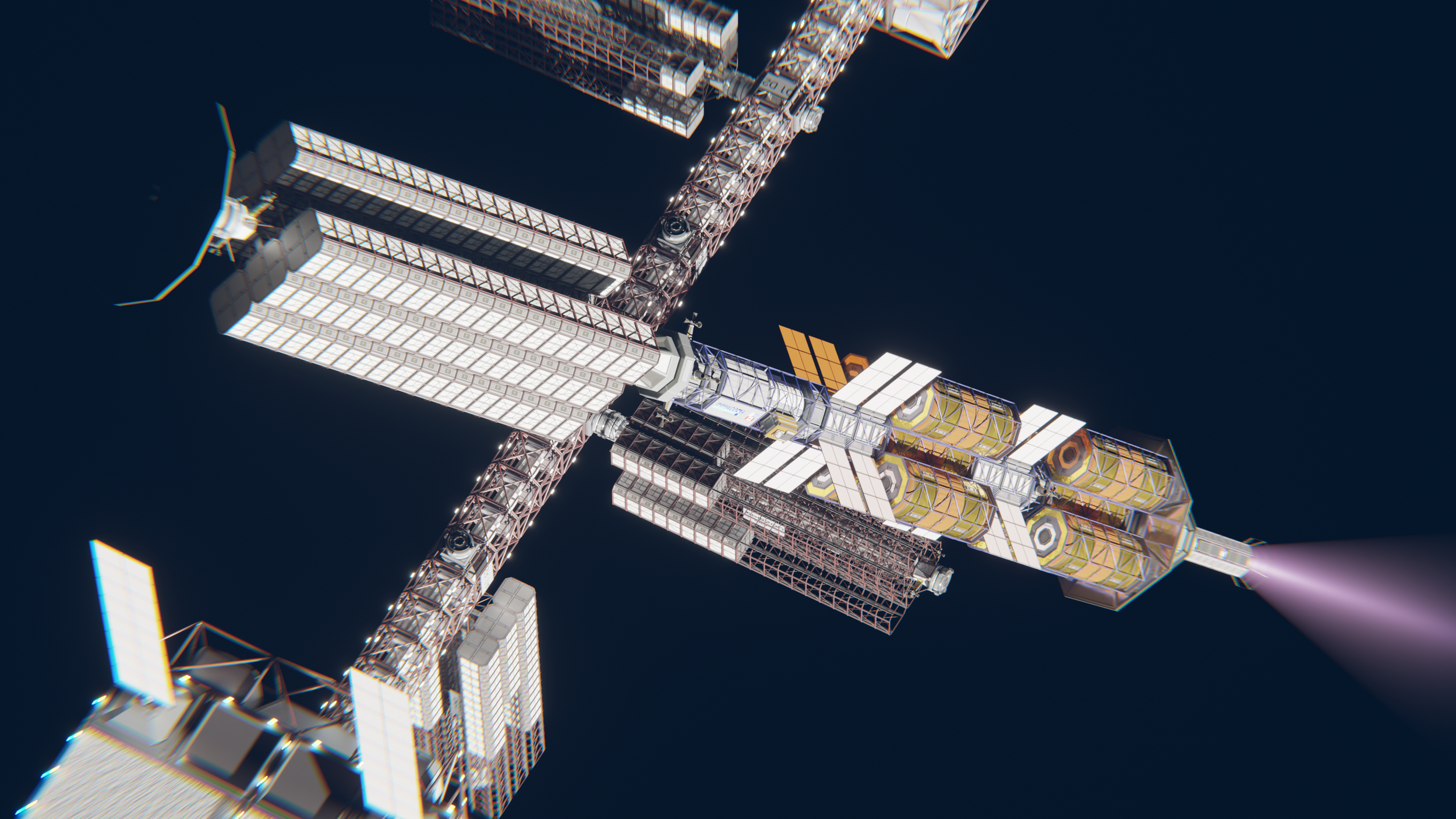
CCCV Gold Standard departing TSF-16